Getting to Pemba in 2026, Flights, the Mozambique Travel Authorisation and the Roads to Avoid
For most people, Pemba is reached by air, and in the current war that's the only sensible way. Pemba Airport, code POL, a few kilometres from the city centre, is the province's main airport and the entry point for most of the oil and gas workforce, aid staff and officials who come to Cabo Delgado. The roads are a different matter.
Flights
The international link that matters most is Johannesburg. Airlink, the South African regional carrier, flies Johannesburg to Pemba about once or twice a day, roughly ten flights a week, in a small Embraer jet; the flight takes about three hours. It's the route the gas contractors use, and it fills up on crew-change days, so book early.
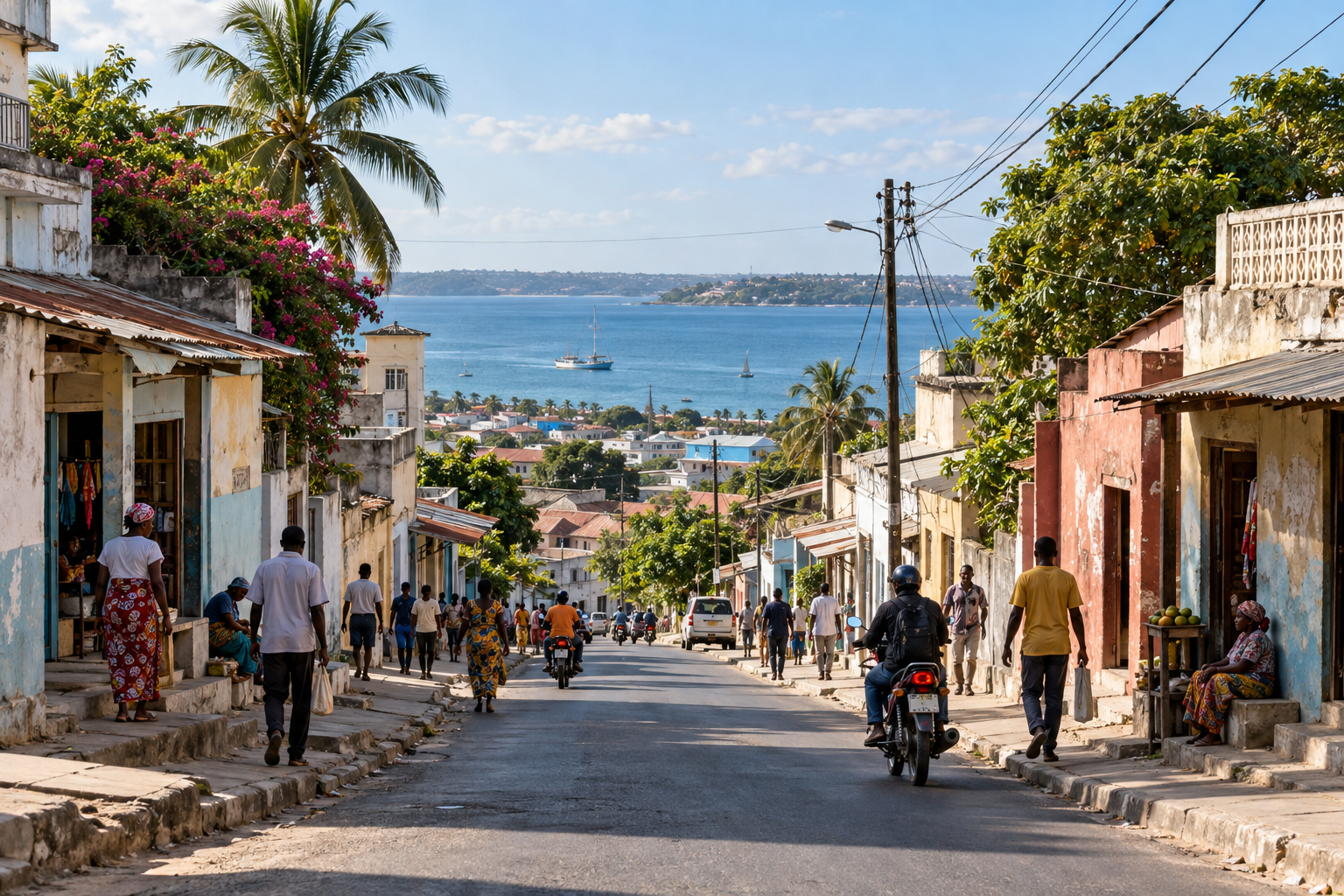
Image: pxef.com
Domestically, LAM Mozambique Airlines connects Pemba with Maputo, Nampula, Beira and Tete. Nampula, about an hour away, is the main regional hub for the north. Booking sites list a new LAM route from Pemba to Dar es Salaam in Tanzania from late October 2026; if it runs, it would be the first easy link between the two Pembas, since Dar es Salaam is the gateway to Pemba Island in Zanzibar (the island guide). Check with the airline before you plan around it.
Charter flights and light aircraft serve the gas site at Afungi, which has its own airstrip, and the island lodges of the Quirimbas (the Quirimbas). Most contractors working at Afungi fly there from Pemba rather than drive.
Entry rules
Since 2023 Mozambique has opened up to visitors from many countries, but the rules keep changing. As of October 2026, British passport holders need an Electronic Travel Authorisation before travelling for tourism or business visits of up to 30 days. It costs about 47 US dollars (a 37-dollar fee plus a processing charge of 650 meticais), paid online through the official eVisa portal, evisa.gov.mz. Apply at least five working days ahead. At the border, officials may ask for proof of accommodation, an onward ticket and proof of funds, so carry printed copies. Rules differ by nationality; check yours with Mozambique's consulate or your own government's travel advice.
Roads
The road network is where the war shows. The N380 runs north through Macomia and on towards Mocímboa da Praia and Palma, the gas region. That road passes through the districts where the insurgency has been most active (the insurgency explained); vehicles and convoys have been ambushed, and in 2026 roadside bombs were planted on roads used by Rwandan patrols. The British government advises against all travel to Cabo Delgado outside the Pemba and Afungi areas and Palma town (is Pemba safe). Treat the road north as off limits unless your employer runs it with security.
South and west, the main overland route runs to Nampula, the region's commercial centre, and on to the deepwater port at Nacala. It is long, slow in the rainy months around the turn of the year, and passes through the southern districts of Cabo Delgado where insurgents were active in 2025 and 2026. The road west to Montepuez, the ruby town, carries similar caveats.
Getting around Pemba
In town, taxis wait at the big roundabout on Avenida 25 de Setembro and Avenida Eduardo Mondlane and at the airport; agree the fare before you get in. Chapas, the shared minibuses, run along the main avenues and out to Wimbe Beach. Walking between the centre and Wimbe is possible in daylight but long, and not advised after dark. Most business visitors use a driver arranged through their hotel or company (where to stay).
By sea, dhows and boats cross Pemba Bay and run up the coast, but the coastal waters north of Pemba have seen insurgent activity, and many visitors to the islands now fly.
The airport is the easy part. Everything beyond the city needs planning.