Pemba Neighbourhoods, the Old Town, Paquitequete, Wimbe Beach and the Camps on the Edge of the City
Pemba is spread along the southern shore of its bay, and its neighbourhoods tell the story of the city in order: the colonial port, the modern administrative centre, the fishing quarter that became a landing beach for refugees, the resort strip that now houses gas contractors, and the camps where families displaced by the war have lived for years.
The old town and the port
The oldest part of Pemba sits at the western end, next to the port, on a low point running out into the bay. It's a small grid of potholed streets lined with colonial buildings, most of them dating from the 1920s, when Porto Amélia was the capital of the Niassa Company's territory (the city's history). Many are run down; some still house shops, warehouses and the municipal market. This is where the commercial port is, and where the trucks and containers of the gas and aid economy come and go (the port).
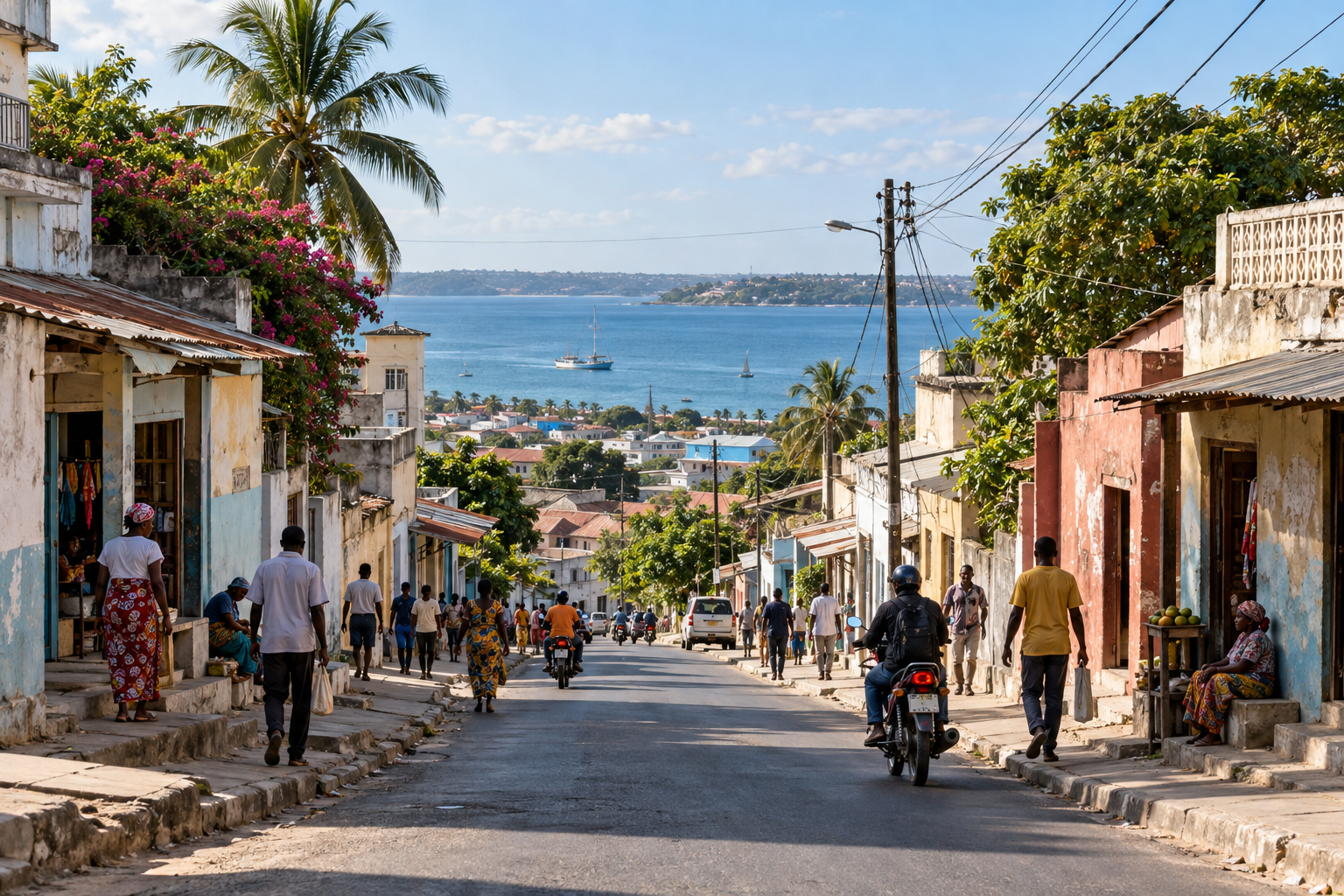
Image: pxef.com
Paquitequete
Just north of the old town lies Paquitequete, a dense quarter of reed and block houses on low, sandy ground that floods at the highest tides. It's Pemba's fishing community: dhows and outboard boats leave from the beach near the lighthouse at Ponta Cufungu, and the shore is busy all day with fishermen, traders and children.
Paquitequete's beach entered the news in 2020 and 2021, when it became the landing point for boats carrying families who had fled the insurgency on the coast to the north, from Macomia, Quissanga, Mocímboa da Praia and, after March 2021, Palma (the insurgency explained). Aid agencies set up reception points on the sand. Many of those who arrived stayed in the city with relatives, swelling an already crowded neighbourhood.
The centre
East of the old town, on the higher ground around Avenida 25 de Setembro and Avenida Eduardo Mondlane, is the modern centre: banks, mobile-phone shops, supermarkets, government offices, the Catholic cathedral, and the offices of the agencies and companies working in the province. It isn't pretty, but it's where business gets done. The main taxi rank and the chapa minibus stop are at the big roundabout where the two avenues meet.
Wimbe Beach
About five kilometres east of the centre, now joined to it by continuous suburbs, is Wimbe Beach, sometimes spelled Wimbi. It was a colonial-era resort and kept going through the civil war. Its waterfront road has most of Pemba's hotels, beach restaurants and dive shops, and on weekends the sand is full of Mozambican families (where to stay and eat).
Since the gas boom, Wimbe has also been where foreign contractors and aid staff live. Many of the lodges and apartment blocks along it cater to them, and business visitors tend to stay here and travel into town by arranged car (is Pemba safe). South of the city, the quieter beach at Murrébué draws kitesurfers.
Metuge and the camps
The war's largest footprint near Pemba lies just across the bay, in Metuge district. From 2020 onward, settlements for displaced people grew there, some planned, some not, housing families from the northern districts who couldn't go home. Several districts in the north have seen people return since the Rwandan deployment of 2021, but new attacks keep adding to the displaced: more than 26,000 people were forced from their homes in Cabo Delgado in the first half of 2026 alone, many of them from the southern districts closest to Pemba.
The camps are rarely on a visitor's route. They are part of the city all the same, and any honest picture of Pemba in 2026 includes them.