Cabo Delgado Humanitarian Crisis in 2026, 900,000 in Need and an Aid Appeal a Third Funded
In June 2026 more than 12,000 people in Cabo Delgado were forced from their homes, according to the UN's humanitarian office, OCHA. Over the first six months of the year the number passed 26,000, and 80 percent of them were women and children. The province where TotalEnergies restarted a 20-billion-dollar gas project in January (the restart) is also among Mozambique's poorest provinces, and its aid operation is running out of money.
The numbers
About 1.1 million people in northern Mozambique needed humanitarian help in mid-2026, according to the aid group Johanniter International Assistance, 919,000 of them in Cabo Delgado. Only about half were receiving it. The UN's humanitarian plan for Mozambique asked donors for 348 million dollars at the end of 2025; six months later it had received 116 million, about 34 percent.
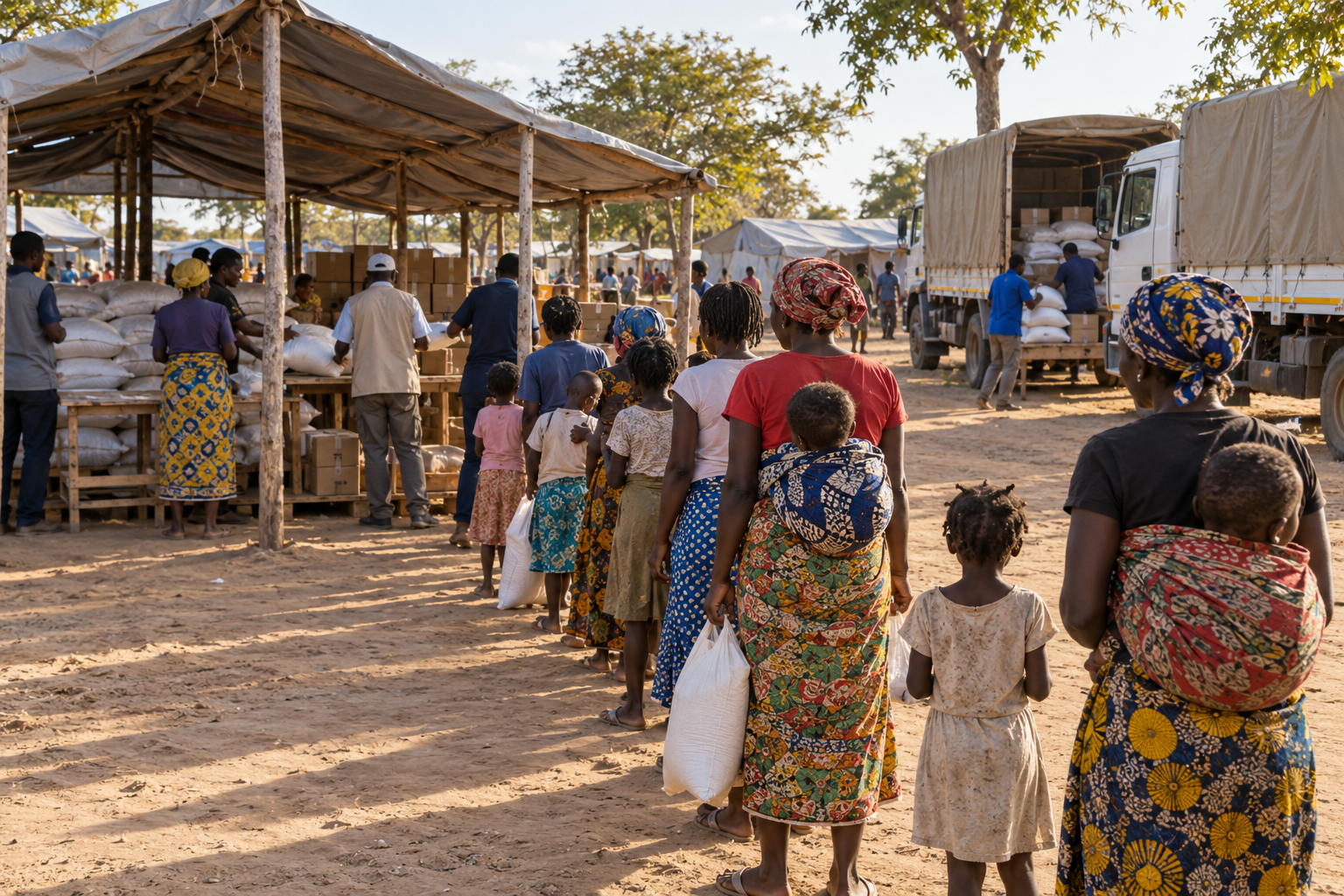
Image: pxef.com
The displacement in 2026 has a new geography. For most of the war, people fled south from the northern districts towards Pemba. This year insurgents spent long stretches in the southern districts of Chiúre, Ancuabe and Quissanga, closer to the provincial capital, looting villages and kidnapping for ransom (the insurgency explained). Families who had fled once now fled again, some to the displacement centres at Montepuez.
Who is affected
The war has run for nine years, so many families in Cabo Delgado have been displaced more than once. At the peak, in 2022, close to a million people in the province had left their homes. Since then many have returned, especially to Mocímboa da Praia and Palma after Rwandan troops retook them (Mocímboa da Praia in 2026). But return doesn't mean recovery: homes, schools and clinics were destroyed, fields went untended for years, and new attacks keep sending people back to the camps.
Children are the largest group. Schools close when attacks come near, and the insurgents have kidnapped children for fighters and for ransom. Women and girls in camps face high risks of violence and exploitation. Malnutrition and cholera outbreaks have followed displacement in past years.
Why the money is short
Cabo Delgado competes for attention with wars in Sudan, Gaza, Ukraine and the eastern Congo, and with deep cuts in Western aid budgets since 2025. The gas restart doesn't fill the gap. Gas revenue goes to Maputo and to the new sovereign wealth fund (the fund), not to Cabo Delgado's camps, and first LNG from the onshore plant is not due until 2029.
TotalEnergies' foundation for the province, endowed with 200 million dollars in 2023, says it has supported more than 8,000 jobs and 7,000 farmers and fishermen. That helps. It doesn't replace an aid operation feeding hundreds of thousands of people.
What to watch
The rainy season, from around the turn of the year, brings flooding, cholera risk and harder access to the camps. The insurgents' movements in the south will decide whether displacement keeps rising. And the money will decide how many of the 900,000 get help.
Pemba is where most of this is managed from, and where many of the displaced end up (the neighbourhoods).