Balama Graphite, the Cabo Delgado Battery Mineral at the Heart of a Western Bet Against Chinese Supply
About 250 kilometres inland from Pemba, near the town of Balama, an Australian company mines what it calls the largest high-quality graphite resource outside China. Graphite is the main material in the anodes of lithium-ion batteries, and China controls most of the world's supply and almost all of its processing. Since Beijing began restricting graphite exports in December 2023, Balama has become one of the few places Western carmakers and governments can point to as an alternative. It sits in the same province as an insurgency (the insurgency explained).
The mine
Syrah Resources, listed in Australia, has run Balama since 2017. The plant can produce 350,000 tonnes of graphite concentrate a year, but output has run far below that: about 163,000 tonnes a year in recent operation, according to Lusa in May 2026. Syrah says it wants to raise production to 200,000 to 240,000 tonnes in the medium term, to keep up with battery demand and cut its costs per tonne.
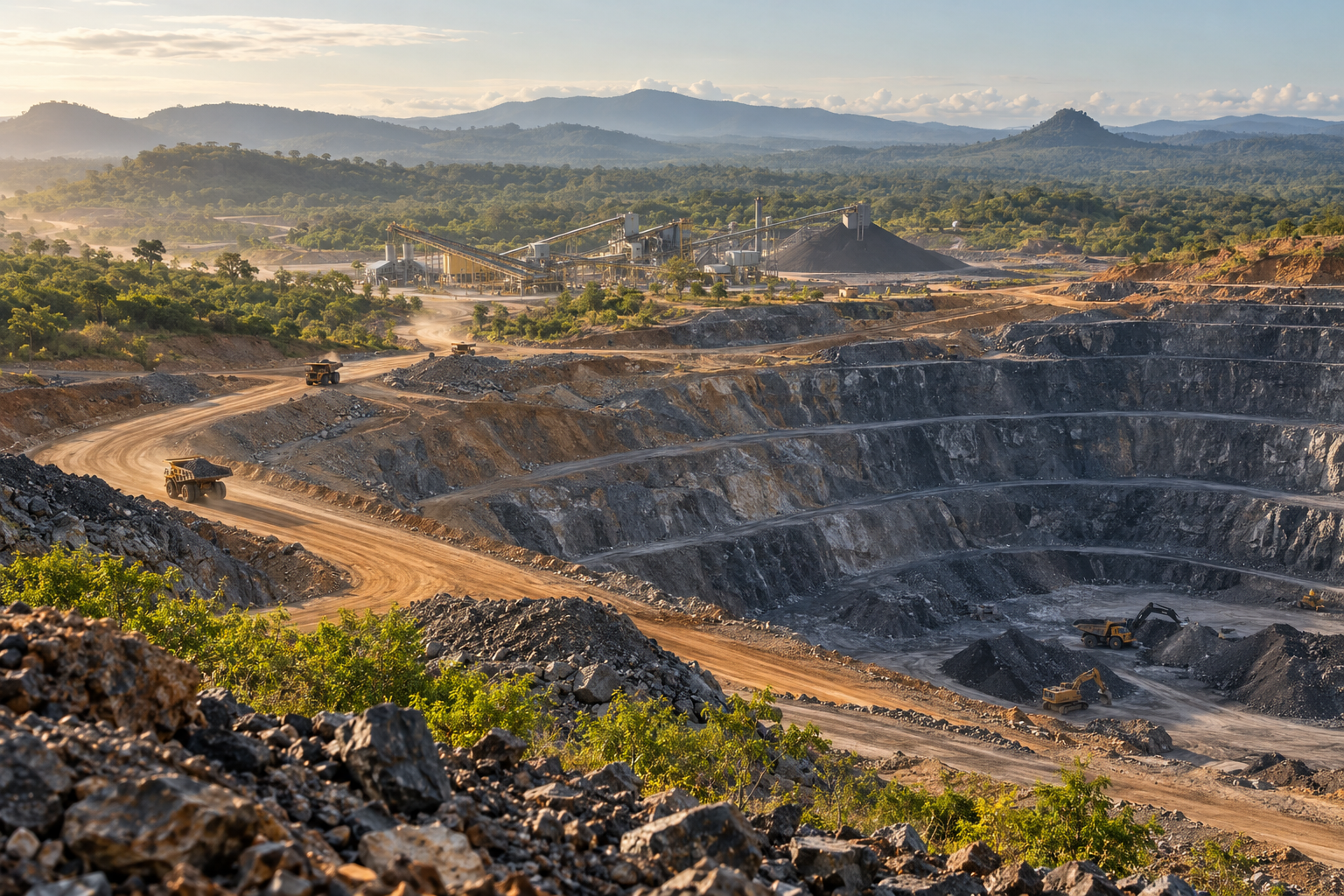
Image: pxef.com
Much of Balama's value lies downstream. Syrah built a plant at Vidalia, Louisiana, to turn Mozambican graphite into active anode material for American batteries, part of a US push to build a supply chain that doesn't run through China. Other customers are buying too: in March 2026 Syrah agreed to supply Canada's NextSource with 34,000 to 68,000 tonnes over seven years for an anode plant in Abu Dhabi serving a Japanese buyer. Syrah says it has contributed 598 million dollars to Mozambique's economy and 4.4 million to community projects since 2018.
Getting it out
Graphite concentrate is heavy and low in value per tonne, so transport matters. For years Balama trucked its product south to the deepwater port of Nacala in Nampula province. Since September 2024 it has also shipped through the Port of Pemba, where a 10,000-tonne transit warehouse opened in 2025 (the port and logistics base). That puts Pemba, a small port best known for gas logistics, on a supply chain that Washington and Tokyo care about.
Six months shut
Balama's weak point is not the rock but the ground around it. After Mozambique's disputed October 2024 election, protests spread across the country, and around Balama local people blockaded the mine over grievances about land, compensation and jobs. Production stopped for about six months. It resumed in 2025 after Syrah signed a compensation agreement with communities, and in the third quarter of 2025 the mine produced 26,000 tonnes and shipped 24,000.
The episode was a warning. The insurgency in Cabo Delgado grew partly from the feeling that the province's resources, rubies, gas and graphite, enrich outsiders while local people lose land (the rubies of Montepuez). In 2026 insurgents operated for long stretches in Ancuabe district, which lies between Pemba and the mining areas, and in Chiúre further south, raising the risk on the roads that carry Balama's graphite to the coast.
Why it matters
For Mozambique, Balama is a rare mining project in a strategic mineral with Western backing. For the United States and its allies, it is one of a handful of non-Chinese graphite sources big enough to matter. For Cabo Delgado, it is another test of whether a resource project can share enough with the people around it to keep the peace.
The next shipments through Pemba will show whether it can.